
Texas Culinary Culture
Texas Culinary
Culture.
Texas cooking is not a trend. It is a tradition built over generations — from the pit masters of Central Texas to the border kitchens of the Rio Grande. West Point Culinary Institute exists to carry that tradition forward.
The Texas Table
A Cuisine Built on Land, Fire, and Time
Texas cuisine is one of the most distinct regional food cultures in America. It draws from Mexican, German, Czech, and Southern traditions — shaped by the land, the livestock, and the people who settled here. Brisket smoked low and slow over post oak. Tamales made by hand. Chili without beans. Kolaches at dawn. These are not just dishes. They are a way of life that belongs in professional kitchens — and in the hands of chefs who understand where it came from.

Three Traditions
The Roots of Texas Cuisine
The Pit Tradition
Central Texas barbecue is recognized worldwide as one of the great culinary traditions. The technique — salt, pepper, smoke, and time — demands patience, judgment, and an understanding of fire that no recipe can fully teach. We teach it in the kitchen.
Border & Tejano Cooking
Tex-Mex and Tejano cuisine are not fusion. They are the original Texas table — built over centuries at the intersection of Mexican and Anglo foodways. Masa, dried chiles, lard, and slow-braised meats form a culinary vocabulary every Texas chef should speak fluently.
Hill Country Roots
The German and Czech settlers of the Texas Hill Country brought sausage-making, smoking, and baking traditions that are still alive in Fredericksburg, Lockhart, and Elgin. Understanding these roots gives a chef context — and context makes a better cook.

The Texas Culinary Manifesto
Why Texas Cuisine Deserves Serious Study
"Texas food is not simple. It is honest. There is a difference."
— Chef Brian West, Texas Culinary Manifesto
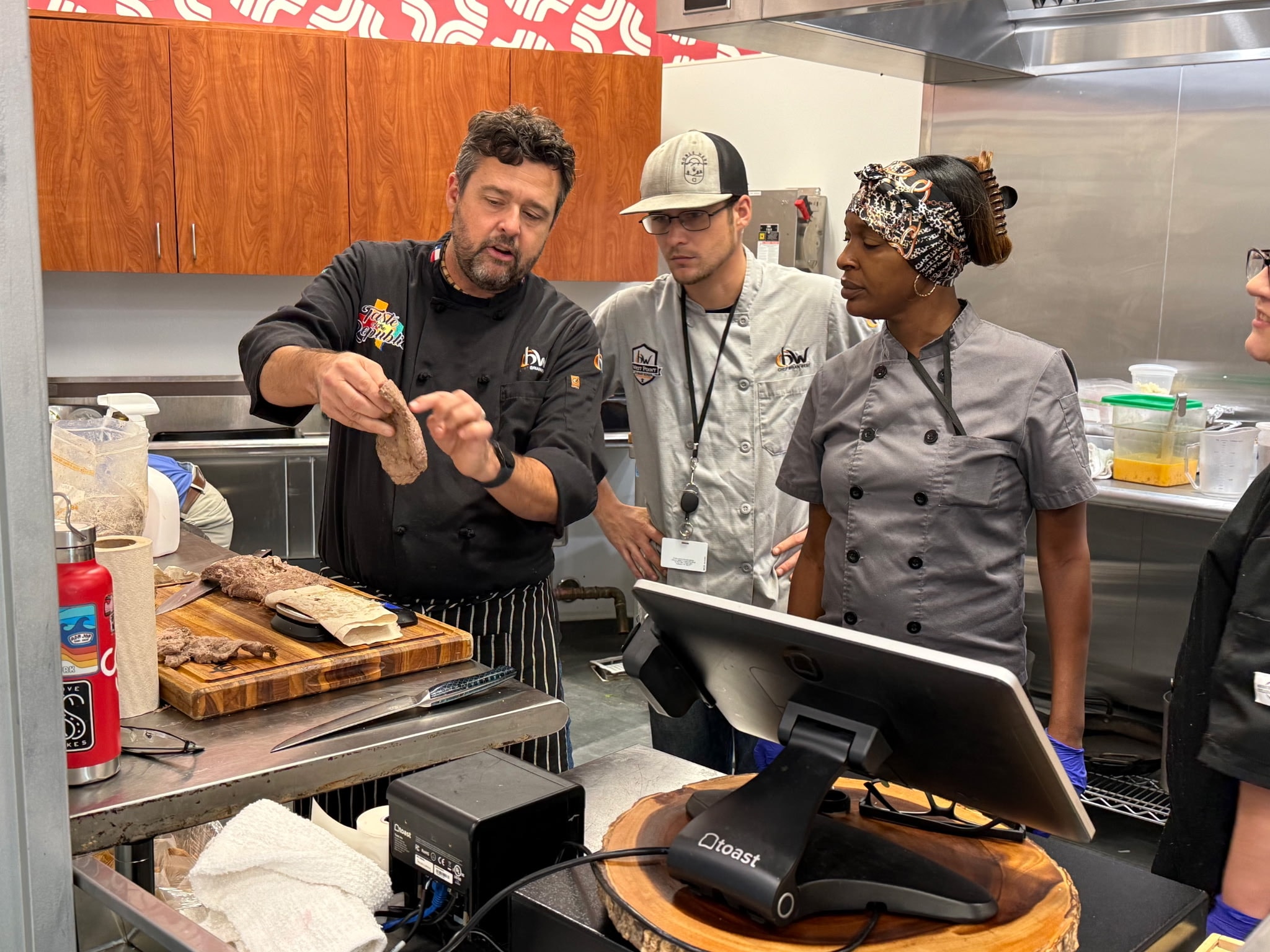
Chef Brian West's Texas Culinary Manifesto is a declaration that the food of this state — its techniques, its ingredients, its stories — deserves the same rigorous study as any classical European tradition. At West Point Culinary, that philosophy shapes every hour of instruction. Students don't just learn how to cook Texas food. They learn why it matters.
From the Kitchen
What Students Carry Forward
"I came in as a line cook who knew how to execute. I left understanding why every decision in a kitchen matters — the sourcing, the technique, the culture behind the dish."
Former Student
Spring Cohort
"Chef West doesn't teach you recipes. He teaches you to think like a chef. That's the difference between someone who can cook and someone who can run a kitchen."
Former Student
Fall Cohort
"The internship month was where everything clicked. Real service, real pressure, real feedback. I walked out with a job offer."
Former Student
Spring Cohort
Bring Texas Culinary Culture Into Your Career
The next cohort is forming now. Applications are reviewed on a rolling basis.